

Posted by Mike
on September 06, 2026

Key Takeaways
Buying personal lubricant bulk is less about choosing the largest case and more about matching formula, packaging, usage, and storage to the people you serve.
- Estimate realistic usage before placing a wholesale order.
- Match water-based, silicone-based, or hybrid formulas to intended use.
- Check compatibility, ingredients, texture, and expiration details.
- Choose packaging that suits hygiene, distribution, and handling needs.
- Calculate shipping, waste, storage, and reorder costs—not just case price.
Define your bulk lubricant needs
A successful bulk order begins with a clear picture of who will use the product and how it will be distributed. A clinic, retailer, hospitality business, event organizer, and household may all need different volumes and package formats. Start with practical demand rather than a supplier’s largest available case.
The goal is to avoid two expensive mistakes: running out during a busy period or tying up cash in stock that expires before it is used. A simple usage estimate, paired with a modest safety margin, usually gives you a more reliable starting point.
Estimate usage by customer, location, or event
Review past sales, attendance, appointment volume, or distribution records where available. If you are starting from scratch, estimate the number of users, the expected frequency of use, and the length of the purchasing period. Separate routine demand from one-off events so an unusually large gathering does not distort your regular reorder plan.
For multiple locations, calculate demand separately before combining totals. One site may need small packets for discreet distribution, while another may use bottles at a service counter. A personal lubricant bulk plan should reflect those differences instead of treating every location as identical.
Choose between individual packets, bottles, and refill containers
Individual sachets are convenient when hygiene, portability, or controlled portions matter. Bottles can reduce packaging per application and suit supervised or private settings where one container is used repeatedly. Refill containers may be economical for controlled dispensing, but they require a clean transfer process and careful handling.
Consider who will open the package, where it will be stored, and whether the product is intended for resale or direct distribution. Bulk lubricant options can help illustrate the range of case formats available, but your own usage conditions should determine the final choice.
Set volume, budget, and reorder targets
Set three numbers before requesting quotes: the volume needed for one purchasing cycle, the maximum cash outlay, and the stock level that triggers a reorder. Include a reasonable reserve for delays without buying so much that the reserve becomes dead inventory. Your target should also account for minimum order quantities and case multiples.
A useful purchasing sheet records product name, formula, package size, units per case, price, shipping, expiration date, and projected monthly use. This makes comparisons clearer and keeps a low unit price from hiding an impractical order size.
Compare personal lubricant formulas
Formula choice affects glide, cleanup, material compatibility, and user preference. Water-based products are often the most flexible starting point, while silicone-based products may suit situations where longer-lasting lubrication is preferred. Hybrid and specialty formulas can fill narrower needs, but they deserve closer label review.
Use the manufacturer’s instructions as the final authority for compatibility and intended use. A formula that feels ideal in one setting may be unsuitable for a particular condom, toy material, skin sensitivity, or distribution requirement.

Water-based lubricants for versatile use
Water-based lubricants are generally easy to rinse away and are commonly selected for their versatility. They may need reapplication as they dry, especially during longer use, so texture and viscosity matter. For many buyers, they are a sensible general-purpose option when broad usability and easy cleanup are priorities.
A water-based formula can also be easier to present across different customer groups because it does not require the same specialized handling as some thicker or oil-based products. Review the label for intended applications rather than assuming every water-based product performs identically.
Silicone-based lubricants for longer-lasting performance
Silicone-based lubricants are valued for lasting glide and resistance to rinsing away with water. That can make them useful where frequent reapplication would be inconvenient. They may, however, require more thorough cleanup and careful review of toy-material compatibility.
Ask suppliers for clear usage guidance and test a small quantity before committing to a large case. Longer-lasting performance is useful only when the formula fits the materials, users, and cleaning routine in the setting where it will be distributed.
Hybrid and specialty formulas for specific preferences
Hybrid formulas combine characteristics of more than one base and may appeal to users seeking a particular balance of glide, cleanup, or texture. Specialty options can include flavored, warming, or otherwise preference-led products. Those features should never replace a review of ingredients, intended use, and compatibility.
For a natural-product audience, ArouselLube is a relevant example to research because its product guide discusses ingredient purity, texture, safety standards, cleanup, and storage. Treat any product description as a starting point, then verify the current label and supplier documentation before ordering.
Check compatibility and product quality
Bulk purchasing increases the consequences of a poor selection. A product that irritates users, damages compatible materials, or arrives with unclear labeling can create waste and undermine trust across an entire stock cycle. Build quality checks into the buying process before approving a case order.
Compatibility is not a single yes-or-no question. It can depend on the lubricant base, the barrier method, the toy material, the intended body area, and the manufacturer’s specific directions. When in doubt, choose a clearly labeled product and ask the supplier for written confirmation.
Review condom and toy compatibility
Check whether the product is compatible with the condoms and toys used by your audience. Oil-based formulas can be unsuitable with some latex barriers, while silicone-based formulas may not suit every silicone toy. Packaging should state relevant warnings clearly enough for staff and customers to understand.
Keep compatibility information with the product rather than relying on memory or informal advice. A general personal lubricant buying guide can help organize questions about bases, ingredients, condoms, toys, and sensitivity before you compare specific wholesale products.
Evaluate ingredients, pH, fragrance, and skin sensitivity
Read the complete ingredient list and look for information about pH, fragrance, flavor, preservatives, and potential irritants. Fragrance-free or simpler formulas may be preferable for people with sensitive skin, but “natural” alone does not guarantee that a product will suit everyone.
Request current documentation, including ingredient specifications and any available testing information. A product positioned around body-safe ingredients and pH-balanced formulas should still be assessed against its actual label and intended use. Clear documentation protects confidence when ordering for a wider audience.
Confirm texture, lubrication duration, and ease of cleanup
Texture is best judged from a sample rather than a product description alone. Compare initial feel, slipperiness, drying time, reapplication needs, residue, and cleanup. If several people will use the product, gather structured feedback instead of relying on one person’s preference.
A small trial can also expose practical issues such as a pump that dispenses too much, a sachet that is difficult to open, or a formula that leaves residue on linens. Resolve those details before they become a case-wide problem.
Select practical packaging and case sizes
Packaging determines how easily a product can be stored, transported, dispensed, and explained. The cheapest container is not always the least expensive option if it leaks, wastes product, or creates extra labor. Consider the complete path from delivery to final use.
Match case size to turnover and space. A large container may work well for a controlled refill station but poorly for individual distribution. Conversely, single-use packs can simplify hygiene while increasing packaging volume and disposal needs.
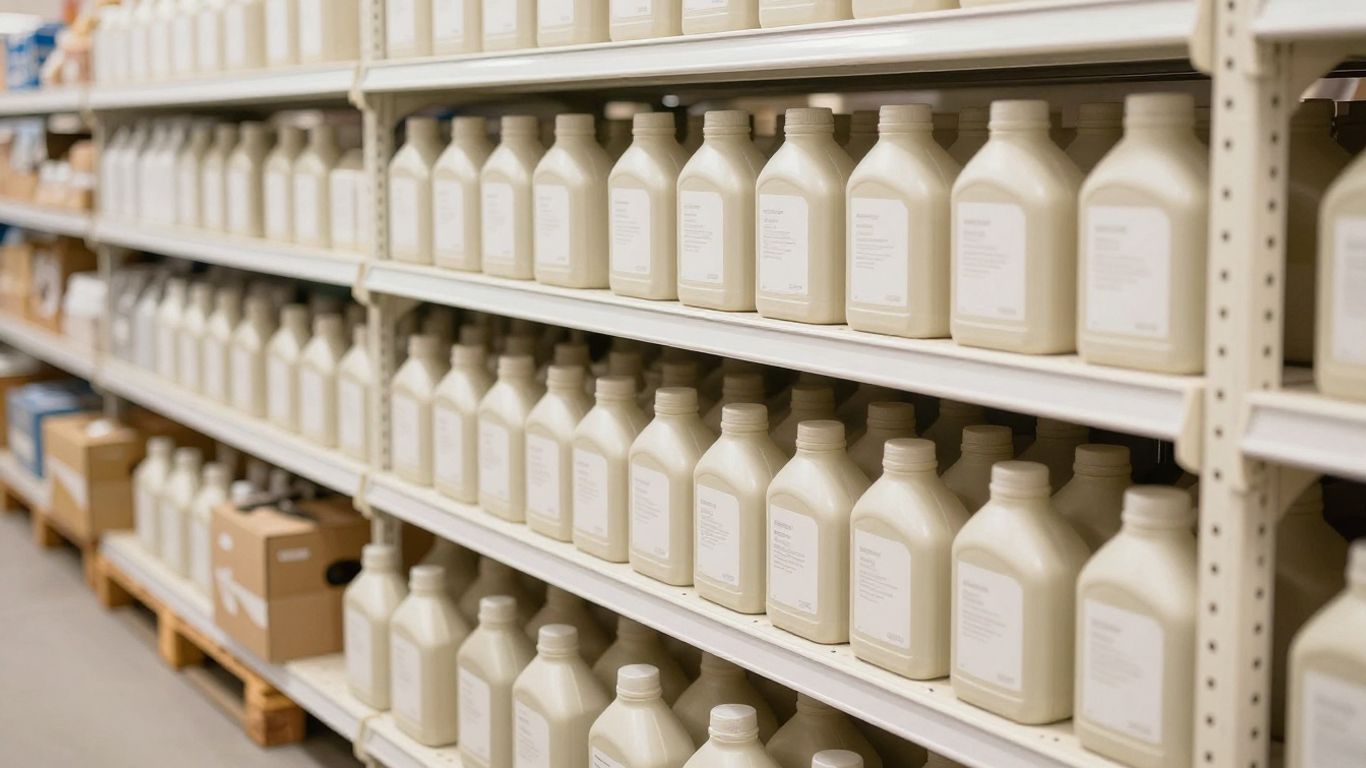
Compare single-use sachets with multi-use bottles
Sachets offer portion control and reduce shared-contact concerns, which can be useful for clinics, events, travel kits, and discreet distribution. Bottles are often more economical for repeated use, especially when a pump or controlled dispenser limits unnecessary product loss.
Compare the usable amount rather than the nominal package volume. A bottle that is difficult to empty or a sachet that leaves product behind may produce less practical value than its label suggests. Individual lubricant packets are one example of a high-volume format designed for distribution settings.
Assess pumps, caps, seals, and leak resistance
Inspect closure quality, tamper evidence, seal strength, and resistance to leakage during shipping. Pumps should dispense consistently and caps should be easy to close without cross-threading. For refill containers, confirm that the opening fits the intended dispenser and can be cleaned appropriately.
Ask for packaging samples if the order is large or will travel between locations. A short transport test with secondary containment can reveal failures that are invisible when a carton is sitting unopened on a supplier’s shelf.
Match packaging to retail, hospitality, clinical, or event use
Retail products need clear labels, attractive presentation, and manageable shelf dimensions. Hospitality settings may prioritize discreet handling and compact storage. Clinical environments often need controlled distribution, documentation, and straightforward hygiene procedures, while events may favor lightweight single-use packs.
Procurement teams can borrow the same comparison discipline used in a garage door buying guide: define the setting first, then compare options against practical requirements rather than appearance alone. The analogy is simple, but the principle applies well to any purchase involving different installation or usage conditions.
Evaluate bulk suppliers
A supplier should be judged on more than a low advertised price. Look for consistent product information, responsive communication, dependable fulfillment, and terms that match your purchasing cycle. A polished website cannot substitute for traceable documentation and clear answers.
Before placing a large order, check how the supplier handles substitutions, damaged cartons, short-dated inventory, returns, and recalls. These policies matter most when a shipment is delayed or a quality issue affects several cases at once.
Verify manufacturer reputation and product consistency
Confirm the manufacturer, product name, formula, package count, and lot information. Compare the sample with the stated product specification, including color, scent, texture, and closure. If the supplier changes the formulation or packaging, ask for advance notice and updated documentation.
Consistency is especially important when several locations distribute the same product. A procurement record should make it possible to identify what was ordered, when it arrived, and which lots were sent to each site.
Request samples, documentation, and expiration details
Request samples before committing to a case, especially when the product will be used by people with varied preferences or sensitivities. Ask for expiration dates, lot numbers, storage instructions, ingredient lists, and any available quality or safety documentation.
Do not accept vague answers about shelf life. The remaining usable life at delivery matters more than the product’s maximum shelf life under ideal conditions. For broader purchasing research, international moving guidance offers a useful reminder to clarify documentation, storage, insurance, and handoffs whenever goods pass through multiple stages.
Compare minimum order quantities and wholesale terms
Compare minimum order quantities, case multiples, payment terms, shipping thresholds, lead times, and return policies. A supplier with a slightly higher unit price may be the better choice if it offers smaller trial orders, longer dating, or more predictable fulfillment.
If you are testing demand, begin with a manageable order and record actual usage. A solo resource-management guide is an unlikely but useful analogy here: limited resources reward careful planning, cautious commitments, and regular review rather than one oversized purchase.
Calculate the true cost of bulk purchasing
The visible case price is only one part of the decision. Add shipping, receiving labor, storage space, damaged units, expired stock, dispensing waste, and any special handling. A realistic cost model helps you compare wholesale purchasing with smaller packs or refill sizes on equal terms.
Use the same assumptions for every supplier. Otherwise, a low unit price may appear attractive simply because one quote excludes freight or contains more units with a shorter usable life.
Compare unit price, case price, and shipping costs
Calculate cost per usable ounce or milliliter, cost per packet, and cost per completed distribution unit. Then add freight and any fees associated with payment, storage, or delivery. If shipping is free above a threshold, test whether reaching that threshold creates excess inventory.
A simple comparison table can make the tradeoffs visible before you negotiate. The figures below are categories to fill with your own quotes, not universal price benchmarks.
| Cost measure | What to include | Why it matters |
|---|---|---|
| Unit cost | Product price divided by usable units | Shows the basic purchase rate |
| Landed cost | Product price plus freight and fees | Reflects what arrives at your site |
| Usable cost | Landed cost adjusted for waste or expiry | Shows practical value |
| Reorder cost | New order, delivery, and handling expense | Helps set a sensible reorder point |
Read the table alongside your actual usage rate. If a case has a lower landed cost but a high risk of expiry, its usable cost may be higher than a smaller order.
Account for storage, waste, and product shelf life
Estimate how much space each case occupies and whether the stockroom can maintain suitable conditions. Include broken seals, forgotten opened bottles, damaged cartons, and products discarded because they are too close to expiration. These losses are easy to overlook when the spreadsheet contains only purchase prices.
Shelf life should be assessed at the time of delivery, not just at the time of manufacture. Ask how the supplier dates inventory and whether short-dated products are clearly identified before shipment.
Measure savings against smaller or refill-size purchases
Compare the bulk option with smaller retail packs, refill containers, or a mixed purchasing strategy. The best choice may be a combination: single-use packets for distribution and larger bottles for controlled, high-turnover locations. Large refill-size options provide one comparison point, but the right size depends on turnover and handling capacity.
Review the calculation after one or two cycles. Actual waste, delivery performance, and user preferences are more valuable than assumptions made before the first order.
Store and manage bulk lubricant inventory
Good storage protects both product quality and the investment represented by a wholesale order. Keep cartons in a clean, dry area away from direct sunlight, excessive heat, freezing conditions, and sharp temperature swings. Follow the manufacturer’s instructions whenever they are more specific than general warehouse practice.
Inventory management also supports safety. Clear lot tracking, regular inspections, and disciplined rotation make it easier to identify problems before products reach customers or staff.
Follow temperature, humidity, and light guidelines
Use a stable indoor storage location with reasonable ventilation and protection from moisture. Keep products off damp floors and away from heaters, windows, and chemical storage. Do not transfer product into unmarked containers, since doing so can remove essential instructions and lot information.
Inspect cartons for swelling, leakage, discoloration, broken seals, or damaged labels. If conditions fall outside the manufacturer’s guidance, quarantine affected stock until its suitability is confirmed.
Use first-in, first-out inventory rotation
Mark receiving dates and expiration dates on outer cartons, then place older usable stock where it will be selected first. Keep newer deliveries behind it and avoid stacking arrangements that hide short-dated cases. This simple first-in, first-out method reduces avoidable expiry.
A weekly or monthly count can track on-hand units, open cases, average usage, and projected depletion. Keep the process simple enough that every location will actually maintain it.
Plan reordering, quality checks, and product recalls
Set a reorder point based on average usage, supplier lead time, safety stock, and seasonal changes. Schedule periodic checks of packaging, labels, texture, and expiration dates. If a supplier announces a recall or quality concern, stop distribution, isolate affected lots, and document where those lots went.
A purchase log should include supplier contact details, invoices, lot numbers, receiving dates, and location transfers. Even a basic system can make a recall response faster and more accurate. For teams refining their internal content and documentation, clear local service content offers a broader lesson: useful information is specific, consistent, and easy to find.
Conclusion
The strongest personal lubricant bulk purchase balances formula, compatibility, packaging, supplier reliability, landed cost, and storage discipline. Estimate real demand, test products before committing, document each shipment, and rotate inventory carefully. That approach keeps intimate essentials practical, comfortable, and dependable from the first case to the final unit.
Frequently Asked Questions
Is buying personal lubricant in bulk cheaper?
It can be, but savings depend on shipping, storage, waste, expiration, and the amount actually used. Compare landed and usable cost rather than case price alone.
Which lubricant base is most versatile?
Water-based lubricant is often a practical general-purpose choice because it is typically easy to clean and broadly usable. Always check the product label for specific compatibility guidance.
Are silicone lubricants suitable for every toy?
No. Some silicone-based lubricants may not be suitable for certain silicone toys. Follow the lubricant and toy manufacturer’s instructions and test cautiously when guidance is unclear.
How should bulk lubricant be stored?
Store it in a clean, dry, stable indoor location away from direct sunlight, excessive heat, freezing conditions, and moisture. Follow the product’s own storage instructions.
Are individual lubricant packets more hygienic than bottles?
Single-use packets can reduce shared-contact concerns and simplify distribution. Bottles may be suitable where dispensing is controlled and cleaning procedures are followed.
How much bulk lubricant should I order?
Estimate usage by location or event, add a modest safety margin, and compare that figure with shelf life and minimum order quantities. Avoid ordering more than can be used comfortably before expiration.
What should I ask a wholesale supplier?
Ask about ingredients, compatibility, lot numbers, expiration dates, samples, storage requirements, minimum order quantities, shipping, substitutions, returns, and recall procedures.





































































